Reflections from AdAmi’s rural outreach work
During a recent visit to Sierra Leone, AdAmi founder Kirsty Wood travelled to a remote area in Bo district where we have recently launched our project. In this reflection, she shares her experiences of meeting some of the young mothers who have joined the first cohort.
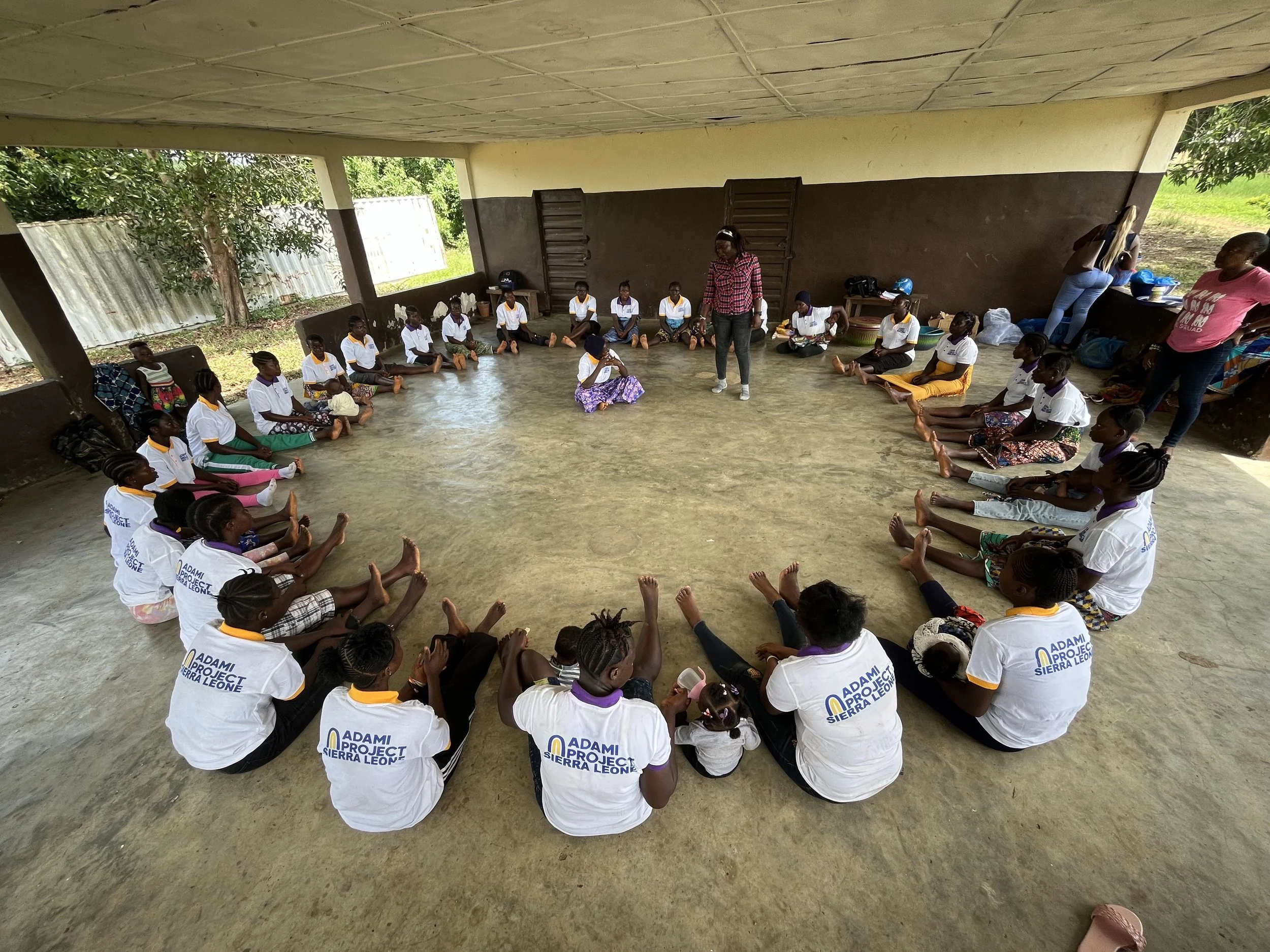
Young mothers gather at the weekly life skills session
The grey paved road quickly gives way to burnt-red dirt tracks. Our vehicle groans as it struggles to manoeuvre around the long, slithering potholes winding across the road.
We are on our way to a remote area where we have recently launched our project. Despite being less than 30 minutes from Bo town, the headquarters town of Bo district, the area feels untouched, forgotten. It is evident that infrastructure is limited and opportunities for young people are scarce, with few schools, training centres, or employment opportunities. Migration to nearby Bo, or further afield, is often seen as the only route to a better future for young people, but it also carries risks.
The team has selected seven rural villages to pilot our project, some of which are accessible only by motorbike or on foot. The midday sun is intense as we walk along a narrow path through thick bush towards the first village we will visit that day. It is beautiful, but secluded, another safety risk for young girls and women forced to walk these paths alone as they carry out their daily chores and errands.
Crossing a rickety old bamboo footbridge over a wide stream, we reach the village. I’m struck by its tranquillity and beauty: mud-walled houses blending into the colours of the soil, lush swaying palm trees, birdsong, and human chatter. But make no illusion, life here is tough. Poverty rates are visibly high and people here survive on very little, living hand-to-mouth.
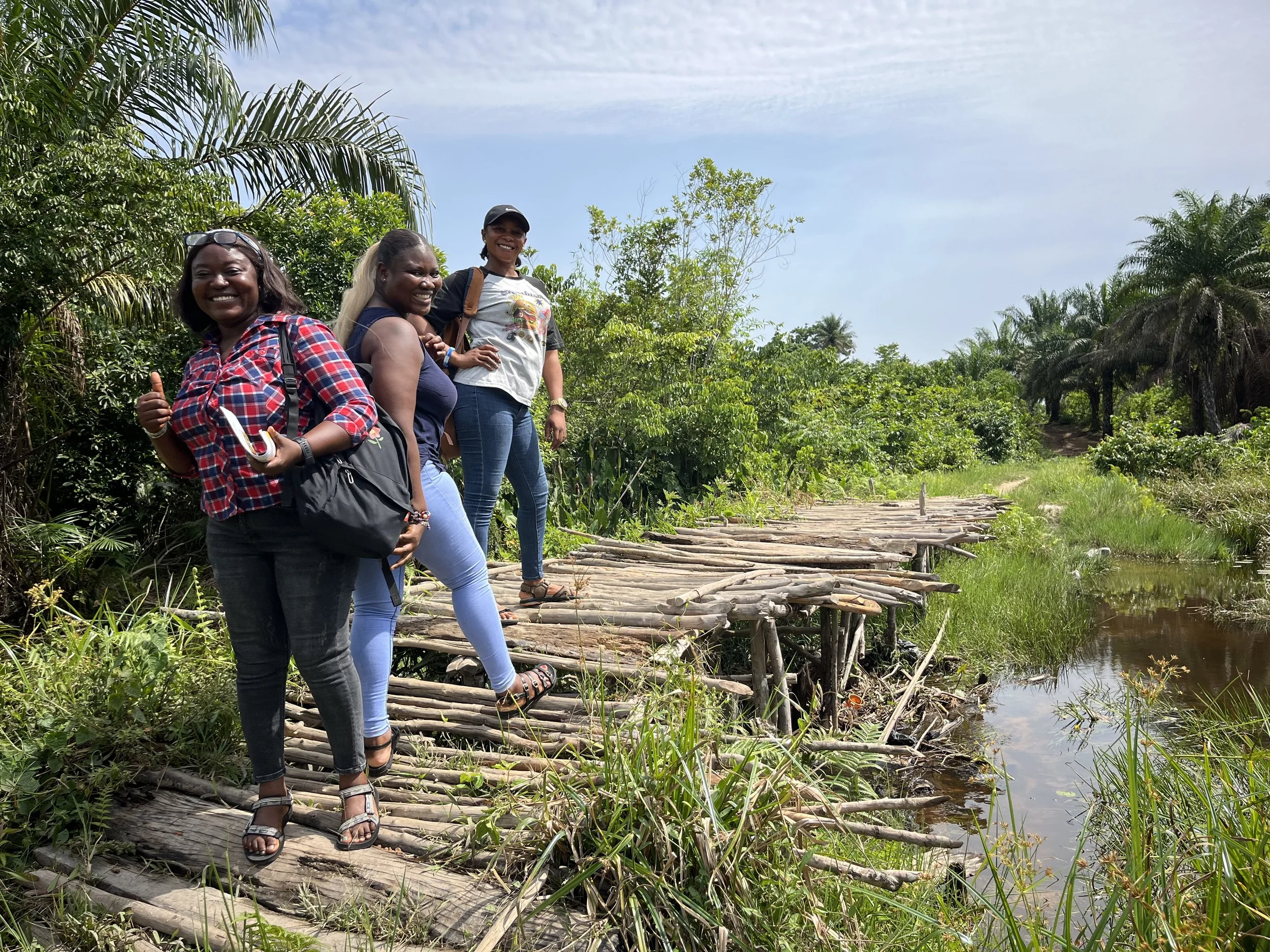
Our local team travelling to the targeted communities. Many are accessible only by foot or motorbike.
In an area of such limited opportunity, rates of teenage pregnancy are high. ‘There are so many vulnerable girls and young mothers in need of our help here,’ Andreta, our senior social worker explains. As I sit by the house of one 15-year-old mother, Selina, I observe several other young mothers walking by with their babies. Selina explains, as she breastfeeds her three-month-old son, that she often goes without food. She doesn’t need to tell me that her life is hard - it is heartbreakingly obvious.
New dangers are emerging in the area for young people. Mariatu, our Country Manager, tells us there is now a network of traffickers operating locally. ‘They are targeting these young girls,’ she explains. ‘They promise to take them to Guinea [a neighbouring country] for a better education. But when they reach Guinea, they are forced into slave labour.’
I meet with 18-year-old Mary, who has just given birth to her child. She explains that when she was just 15, she was trafficked to Guinea by a woman she met in her village. She had been promised support to return to school. Instead, she was forced into domestic labour. Distressed by the situation she found herself in, she was eventually able to call for help and make it back to her family.
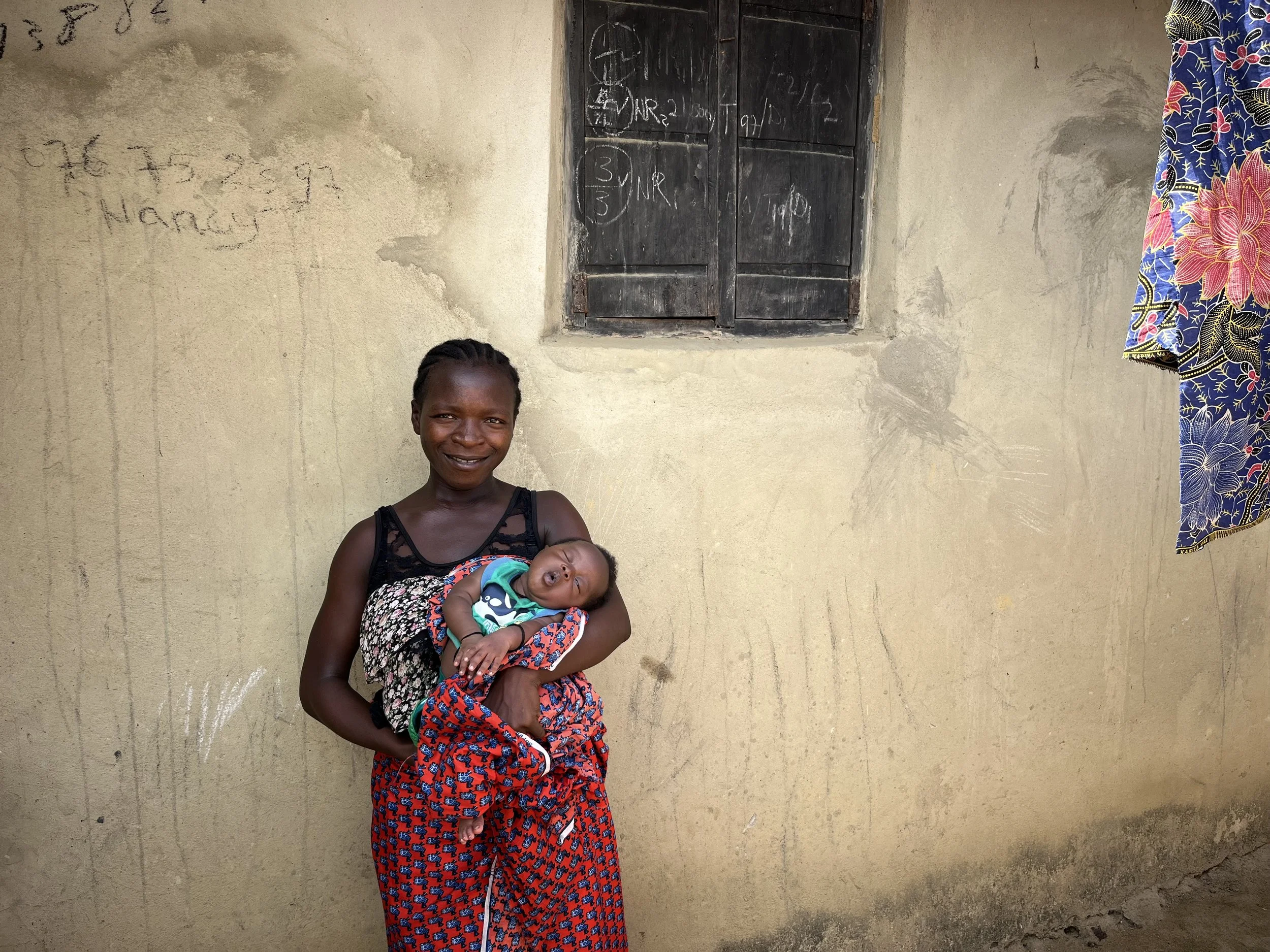
Mary, with her newborn son
Life back in her village was not much easier, and the vulnerabilities that had led to her being trafficked remained. She explains that she later became pregnant by an older man who had promised to support her with school fees and food. After she became pregnant, he disappeared. She looks to the ground as she speaks about the deep regret and shame she carries.
But AdAmi is now giving Mary and Selina hope. A few months ago, they were two of 31 young mothers selected to join the first cohort from the community. Some of the girls are as young as 13 and 14 years old.
For the past few months, they have been gathering as a group to participate in life skills training and Circle of Confidence events with our team in a local community space. At these events, they not only take part in vital life skills sessions, but also have the opportunity to come together to share experiences and learning, grow in confidence, and begin to hope again. I join their weekly event. Their quiet faces and demeanour transform as they dance and clap, joy spreading across their faces. I’m reminded of one of the greatest gifts that AdAmi continues to give them - that of hope.
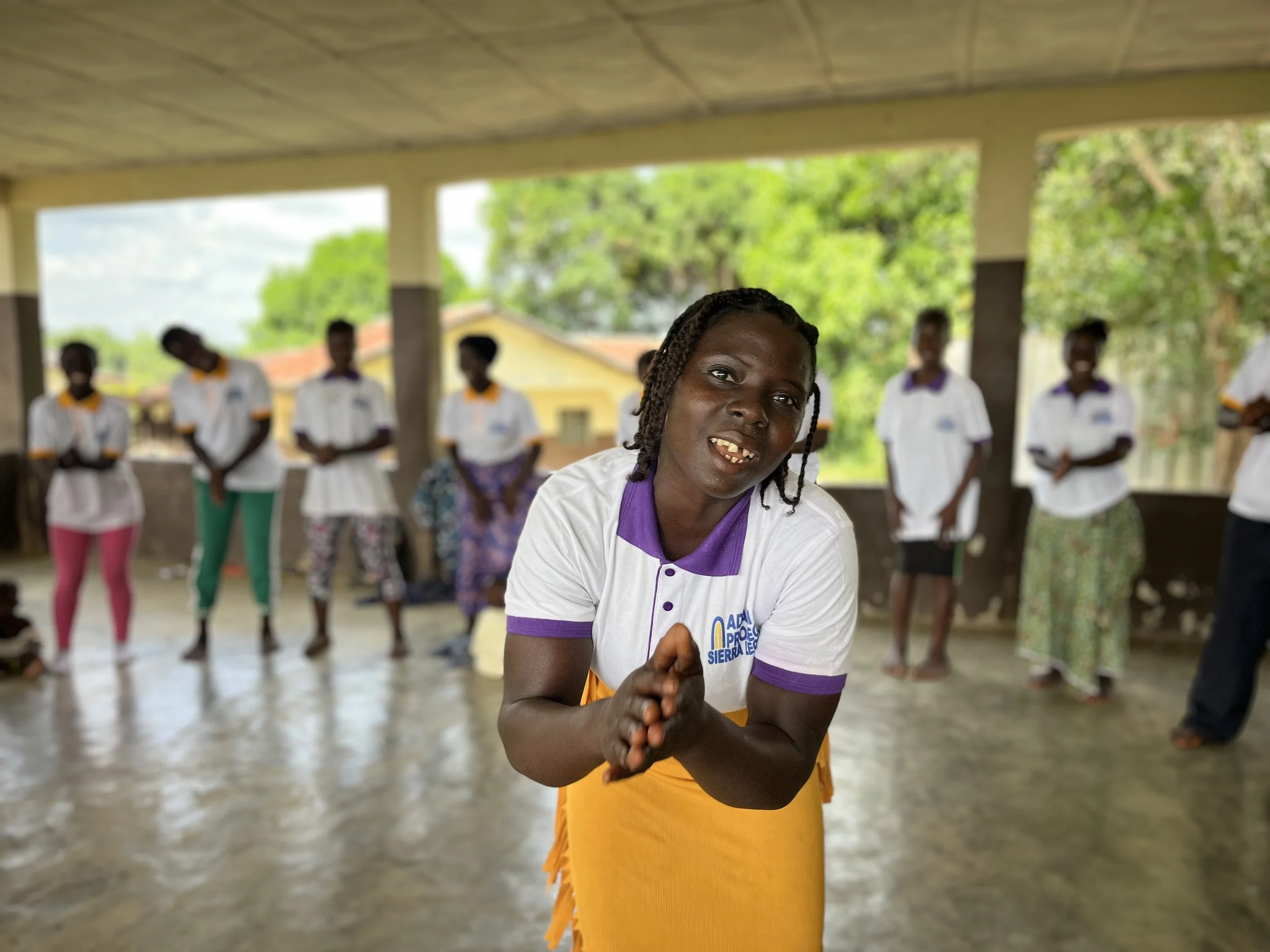
Dancing and singing form an important part of the life skills sessions.
Soon, these girls will begin to participate in vocational and income-generating opportunities, and the younger girls will be supported to return to school, alongside accompanying support to help them overcome key barriers to participation. With this help, we will empower them to gain the skills, knowledge, confidence, and networks they need to build brighter futures for themselves and their children.
As we leave the village and begin the journey back to Bo, the road still feels rough and uncertain. But for girls like Hawa, Mary and Selina, there is now at least the possibility of a different direction.
‘I want to empower myself so I can support my family,’ one young mother, Hawa, explains. ‘I want to make them happy and give them something to smile about.’
It is a simple wish, and one that finally feels within reach, thanks to the support of the AdAmi Project.