In 2018, I visited Sierra Leone just as the AdAmi Project was starting its pilot with 25 young mothers. I recently went back for the first time, with fellow trustees Uttam, Jenny and Donna and our Founder, Kirsty. It was such a privilege spending time with many of the young mothers from the pilot and seeing where they are now. So much has changed since my last visit, for the young mothers, their communities and our team. Here are some of my biggest takeaways.
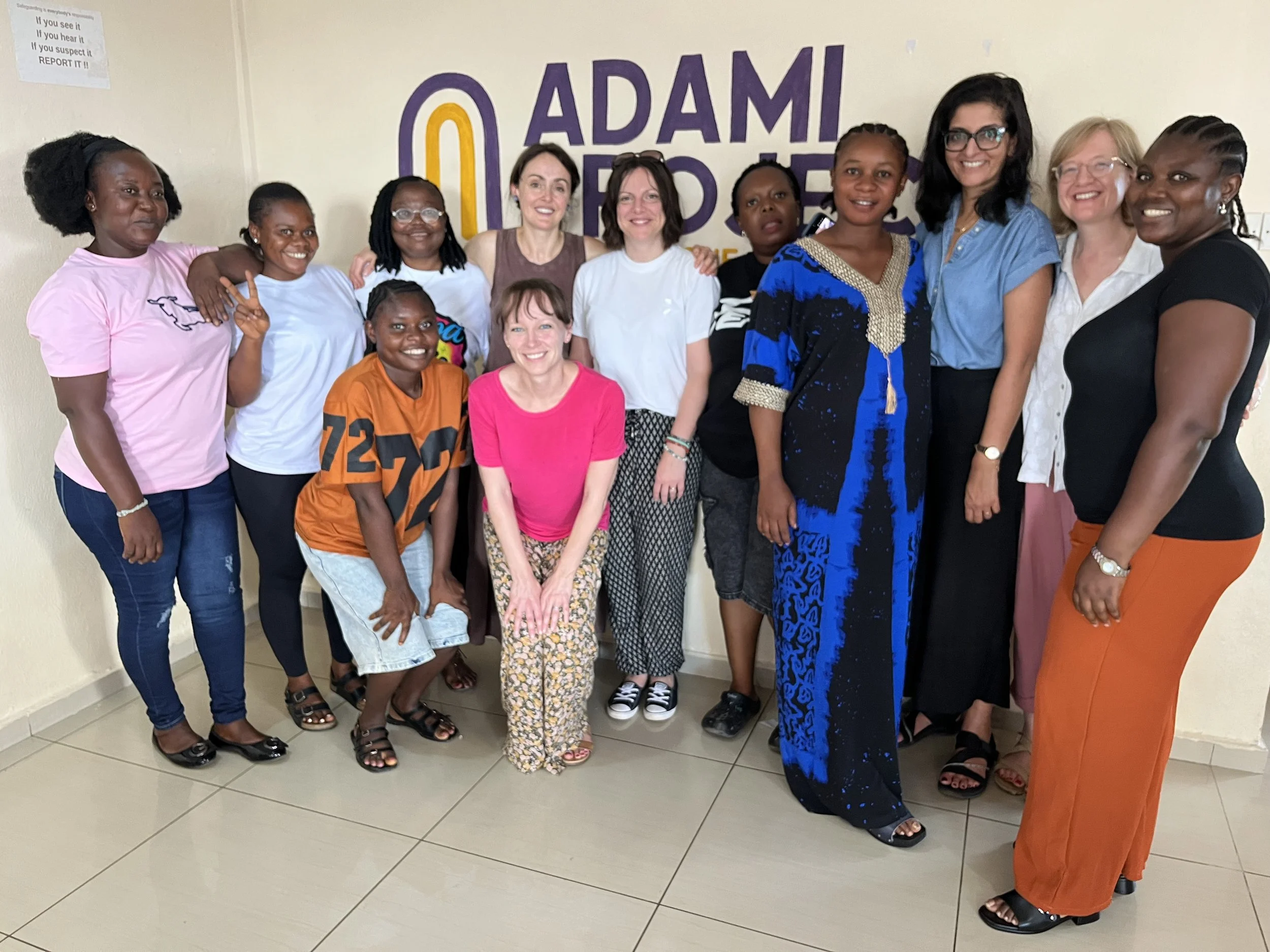
Emily (in front, with pink top) together with the team in Bo
The young mothers
I was so impressed to see how their lives had changed since I first met them in 2018. They’re skilled and educated, and they earn enough to support themselves and their children. They’re respected in the community, and they act as leaders and role models.
We had lunch with five of our university Scholars, who all joined the pilot in 2018. Between them, they’re studying nursing, community development, adult education and early childhood education. One of them is Aminata, whose story inspired the creation of the AdAmi Project. When she became pregnant, she was thrown out of her home and banned from school. ‘Before this time my peers used to laugh and call me a drop out. But look at me now. I am at college. I am becoming someone in society. I am really proud of myself.’
I could also see how much the young mothers’ confidence has grown. It shows in how they interact with others and in how they talk about themselves and their hopes for the future. Nancy is one of our peer mentors. She visits young mothers to check they’re going to school and helps them work through the challenges they face. ‘I am a living example other young mothers should look at. I tell them to look at me, to use me as an example of what is possible, to remember my story when they feel like giving up.’
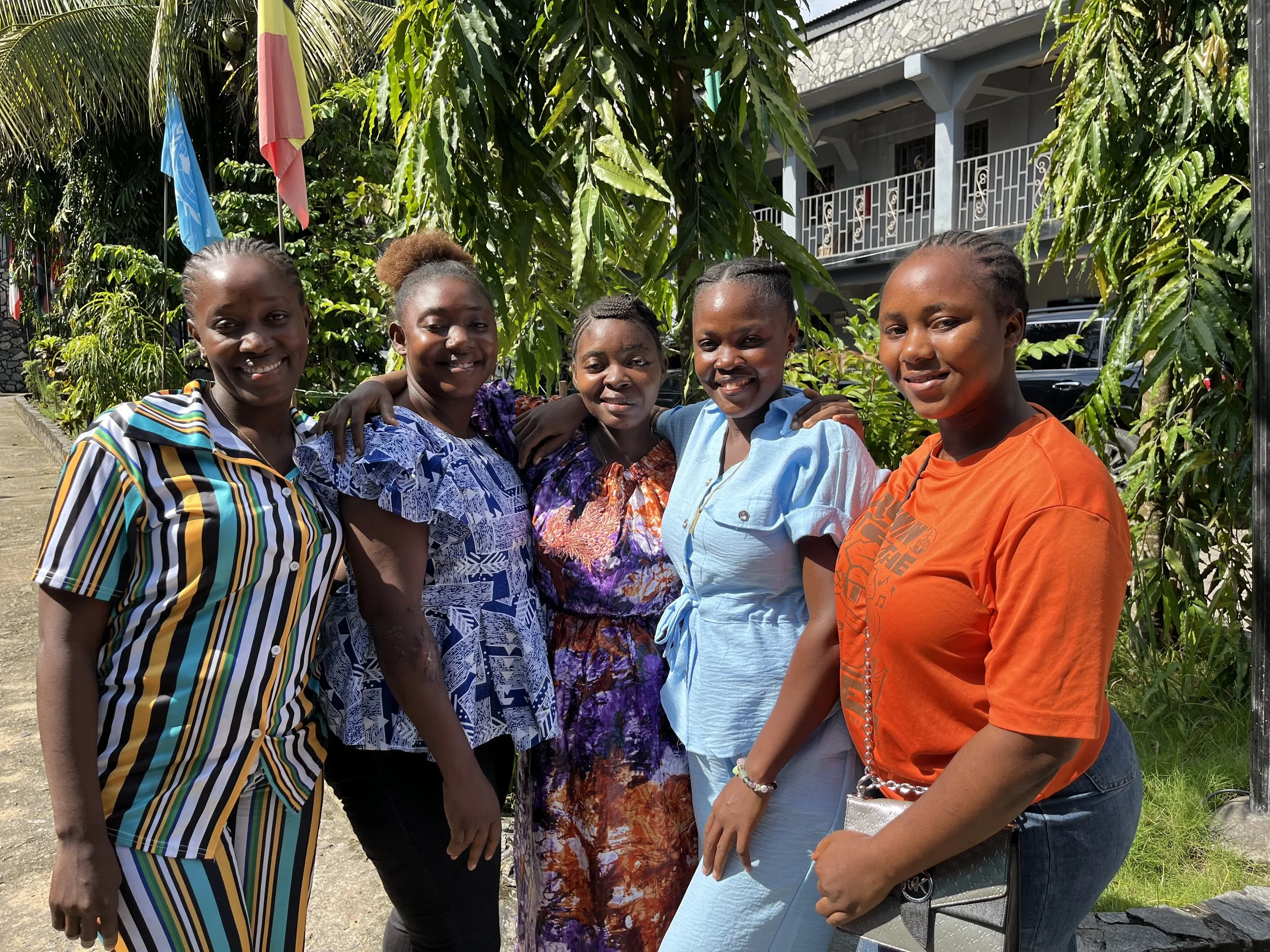
Our university scholars
The community
The young mothers are coming together to support and advocate for each other. The Community Girls Network has grown, and the young mothers lead it themselves. Tiangay is one of its leaders. She is studying adult education and community development at university. ‘I fight against violence in my community.’
Caregivers are changing how they see young mothers too. Some had thrown the girls out of their homes because of the perceived shame of the pregnancy. After going through the project’s family mediation process, they have rebuilt strong relationships with the girls and are incredibly proud of what they’re achieving. Tiangay’s mother once asked her to leave home. ‘Now my mother tells me she is proud of me.’ When these caregivers see other families in the same position, they now speak up for the young mothers and encourage other caregivers to support them.
We also visited a more rural community outside Bo, where we’ve just set up a vocational centre for young mothers. It’s the only one in the community, and many girls travel miles to attend. They’re training in hairdressing, catering, soap making, tie-dye and weaving. Ami, a former student, now teaches weaving there in a paid role. The young mothers welcomed us with a song. ‘Before we formed the project, we were not united as young mothers, we even had conflicts. When AdAmi came they reunited us. Now we see each other as one family.’
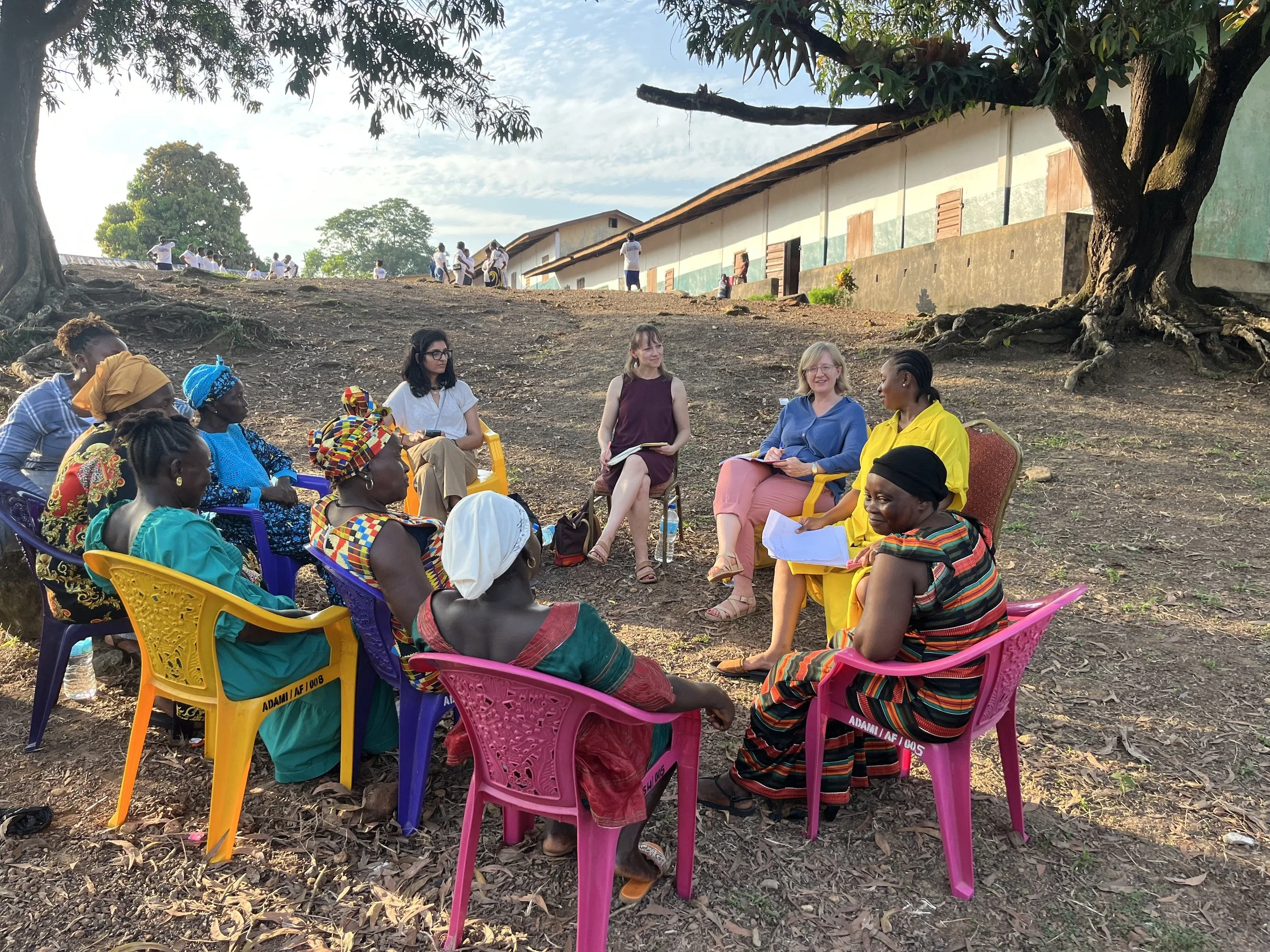
A focus group discussion with caregivers
Our local team
The AdAmi Sierra Leone team has grown. They’re incredibly passionate, knowledgeable and hardworking, and they have built strong, trusted relationships with the girls and the communities.
In the new community where we’ve just extended our project to, people didn’t trust AdAmi to begin with because so many projects had come and gone. The team kept turning up every week, kept community members engaged and informed, and ran weekly life skills sessions with the girls. Thanks to that consistency, the project now has the community’s support.
We have also set up a local supervisory board. Our local champions are dedicated to the project and support it with their specialist knowledge and skills.
The team is now connected to a strong network, so we can offer young mothers more complete support. We met some of our referral partners at a learning panel we organised during the visit. This included a midwife, a representative from the Ministry of Gender and Children’s Affairs, and a specialist organisation working to end gender-based violence. As one of our referral partners told us: ‘Young mothers are now speaking up. Before this time, they were isolated. Now they’re boldly telling their stories.'
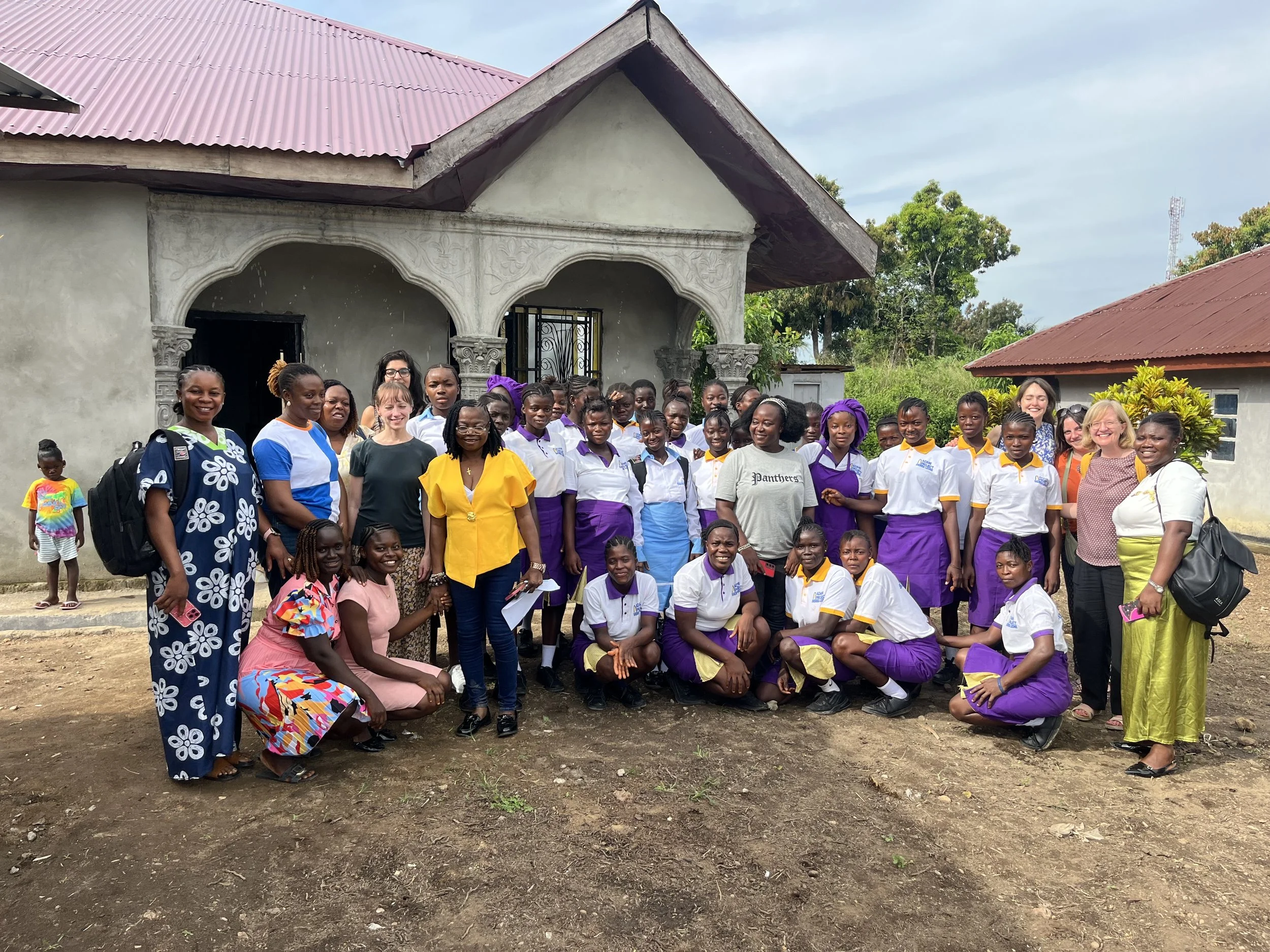
Outside our training centre for young mothers
Looking ahead
All of this reaffirms our mission, our strategy and the direction AdAmi is going in. I can’t wait to do more!